by Charles R. “Chuck” Middleton, Ph.D., President Emeritus, Roosevelt University
Presented at the Leadership Institute, October 16, 2024, below is a lightly edited transcript. Some links may require log ins.
What follows is a personal recollection, recording the early founding events of the LGBTQ Leaders in Higher Education.
Some of this material is based upon my memory, and we all know how problematic memory can sometimes be, especially after decades of living. I have accordingly supplemented it with documentary evidence which informs most of the history recorded here.
Let us begin by going back to the previous century, to the year 1994. Up to that point in the 358 years since the founding of Harvard University in 1638, there had been the occasional LGBTQ president here and there, mostly in private colleges. But none of them had been publicly acknowledged as such in their own lifetime.
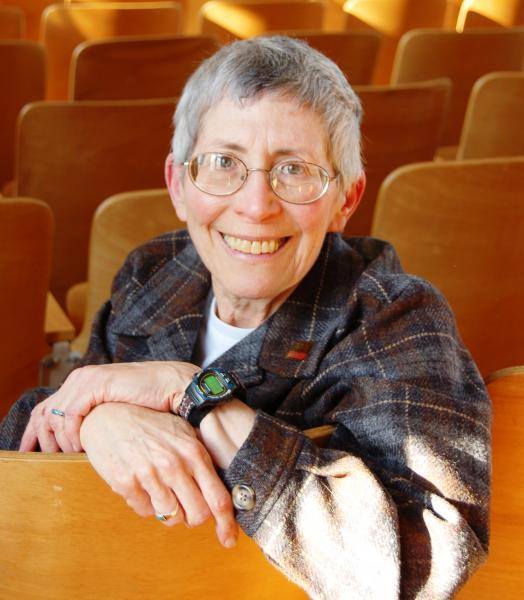
For our purposes, history begins in 1994. To borrow a biblical reference, in the beginning, there was Theo. Theo Kalikow (left), in the annis mirabilis of 1994, after a one-year stint as interim president at Plymouth State College in New Hampshire in 1992-93, was appointed president of the University of Maine, Farmington, thus becoming the first acknowledged LGBTQ president in the history of American higher education.
And then, seven years later, in 2002, a very progressive university that from its founding in 1945 had ascribed to the notion that “everyone is welcome here,” took a chance on me.
Continuing the biblical metaphor, then there were two, one female and one male, and it was good.
But nowhere near sufficient!!!
As I told the reporter from The Chronicle of Higher Education, which finally got around to telling the story in 2007, Theo and I had not broken a glass ceiling; we had, instead, set aside the very real plexiglass ceiling that heretofore had both been in place and largely remained so. [Chronicle story from August 3, 2007, may need log in.]
Enter Ray Crossman, who in 2003 came to Chicago to be president of the Adler School, now Adler University. He and I quickly connected and over the next few years developed a pattern of having breakfast or lunch on a regular basis to share war stories and ideas about lots of emerging and many ongoing issues in higher education.
Meanwhile, others emerged: Ralph Hexter at Hampshire College in Massachusetts, Sean Buffington at the Philadelphia School of the Arts, Charlita Shelton at the University of the Rockies – along with five or six others initially. As our numbers gradually increased, I meticulously contacted each of these new arrivals as they were announced, largely so that each new appointee would know there were others out there to help them if needed. Identifying new appointees was challenging but that’s another story for the future.
By academic year 2009-2010, after some informal and mostly social meetings involving two to five of us (randomly selected because we happened to attend the same meeting or conference), we discovered that there were, according to my count, thirteen of us. As a practical matter, it became apparent that if we were to continue to support each other and get to know and support new appointees, we would need to be more purposeful than relying on chance meetings or the occasional discoveries of new colleagues either online or by word of mouth.
Certainly, Ray and I had had some preliminary discussions about this challenge. Discussions were fine but what was needed was action.
I would like to think that the positive changes in the country in the first decade of the millennium served as a spur to our initiative to organize. As an antidote to overly emphasizing that factor as causal, there is solid evidence that on the broader issues of inclusion in higher education and elsewhere LGBTQ people were difficult to find in high level positions.
One example will suffice: in the winter of 2008 the American Council on Education (ACE) had published a special supplement on the presidency entitled, “The Spectrum Initiative: Advancing Diversity in the College Presidency.” I have recently reviewed my copy of that publication and nowhere to be found, in any context, are the words “lesbian” or “gay.” Experiences like this brought the concept of advocacy into our emerging purposefulness to organize.
The first step is well recorded. I will quote an email I sent on November 29, 2009, at 6:47 p.m. to nine of the thirteen LGBTQ presidents that I knew personally: in addition to myself and Ray, they were: Chris Cassirer, Ralph Hexter, Neal King, Theo Kalikow, John Jenkins, Tony Murdoch, and Brian Casey. (Others later joined as the year progressed, as we will see below).
The subject was “‘We hearty few.’”
Hello friends, with apologies to the bard, but I couldn’t resist!
I’m writing as I promised some of you earlier this fall after a chance encounter of a few of us in Chicago, to suggest that we have some sort of gathering of LGBT presidents in 2010 if there is any interest in doing that.
The idea, I suggested, was to meet, perhaps with spouses, “for some informal networking and to discuss common experiences/challenges that we face and what we have learned that might help others be even more successful than they already are.”
After confirming that eight of the nine would definitely attend, Ray and I decided to proceed. I want to point out here explicitly how much we as an organization owe to Ray’s leadership during these transitional weeks. He formed a steering committee and saw to it that an agenda was set and a meeting date determined. Without his persistent and dedicated commitment to this work I am certain that the meeting itself would have been less successful.
The steering committee set the meeting in Chicago for Friday and Saturday, August 6-7, 2010. There were two reasons for picking that location and that date. Meeting in Chicago, as a central location, made sense for traveling members and it had the added benefit that Adler and Roosevelt resources could be dedicated to the meeting.
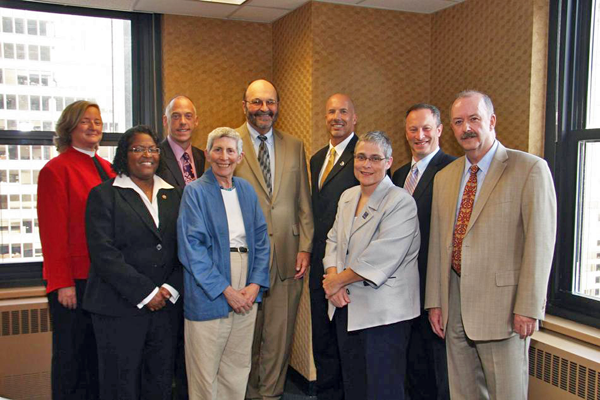
The date coincided with Market Days, an annual LGBTQ street festival in the Boystown neighborhood, which marked then as it does today the high point of the summer in our community.
Two issues faced committee members during their deliberations. First and foremost was the need to establish a meaningful, substantive agenda. This was a serious matter because Ray and others quickly realized that making it a mere informal social occasion would not suffice.
After a few weeks of deliberation, the final agenda emerged: we were to have four “conversations” about key issues, each of the sessions to be led by a pair of the Steering Committee members. As word got out new colleagues began to contact us about joining so the final program was developed by the following people:
- Working with boards and other stakeholders as LGBT leaders [Neal King and Katherine Ragsdale, who had self-identified that spring].
- President’s professional development: within this presidency and towards the next presidency [Theo Kalikow and Karen Whitney who had also self-identified that spring].
- Advocacy: developing other LGBT leaders and related issues [Charlita Shelton, a third self-identified participant that spring, and Ralph Hexter].
- “This Group”: name, purpose, communication, next steps, next meeting [Les McCabe who also self-identified and Ralph Hexter].
In a very progressive move, our partners were to meet separately to devise ways for them to participate in our deliberations as an organization, a clear and at the time novel idea in higher education organizations, reflecting our belief that our partners/spouses are individuals who live their own independent lives and are not just mere extensions of us. I call this the ‘first lady’ syndrome, still alive and well in some parts of higher education today. Ray’s partner, Chris Dillehay, and mine, John Geary, were asked to lead this discussion.
In the final session, which Ray and I led, we came together for a discussion to “share observations and insights from our prospective conversations.” This is not the time nor is it the place to delve deeply into the content of these conversations, but one unplanned experience at this meeting became foundational to the new organization.
Because we scarcely knew each other or about how we “hearty few” had gotten to where we were in our careers, once we gathered we decided spontaneously to begin with a round robin conversation about ourselves both personally and professionally: an introduction, not just of our name and institution but more personal. Who we were as people and leaders was the focal point—and no bragging about what a wonderful institution we worked for. We all can give those “presidential” speeches when we have to, but we deliberately eschewed them in this gathering!
Wow!!! Such diversity of experience, ranging from Theo, then president for twelve years, to Karen Whitney, who had served for a month.
This conversation inaugurated a tradition, much valued by both new and sustaining members annually, of beginning each meeting by checking in with each other to ascertain how we were doing. For me, these were always the most gratifying parts of our subsequent meetings.
I will be brief about the second challenge we faced in the spring of 2010. We knew that it was important to alert the world that, to coin a phrase, we were here, that we were queer, we were fabulous, and it needed to get used to us.
To make the point more broadly, we needed press. Ray, then as now, the master of securing meaningful and sustainable visibility for the organization, notified The Chronicle of Higher Education and Inside Higher Ed, both of which published stories in 2010 of our forthcoming gathering. He also successfully secured a more comprehensive personal interview with The Windy City Times, a well-established LGBTQ Chicago newspaper with national visibility.
By June, the word was out.
We received numerous emails from around the country as a result, with offers such as presenting to us research findings about our community generally, attending in order to record the meeting in depth as it occurred, and even one offer to serve as secretary pro bono in the early stages of agenda setting if that would help in our planning.
Perhaps most important, there were the seven new presidents who identified themselves to us in the spring, a fifty percent increase in our numbers, bringing us to twenty as the summer began. By the end of the summer, we numbered twenty-four!
All of this activity was heartwarming. I want to end with one story from among many we received that demonstrated, as if it were necessary, that we were on to something.
Towards the end of May the following email arrived:
I read with great interest today in The Chronicle and Inside Higher Ed about your plan to form a group for gay college presidents and your meeting this August. After 28 years of trying to discover who I am, 2 years ago I accepted that I am gay and one of my biggest struggles has been my worry that I would have to give up my dream of being a president of a small liberal arts college. I am so excited to hear about the growing number of openly gay presidents and am so encouraged by your desire to foster a higher ed community that is more accepting. I am nearly two years away from completion of my PhD in higher education from the Institute of Higher Ed here at the University of Georgia. I can only hope that once I begin to look for new opportunities [,] that the environment for gay administrators in higher education has improved. Thank you for your efforts to help make my dreams come true.
I had forgotten this email until I prepared this talk, and naturally I wondered whatever happened to the author; ergo, I Googled him. His name is Wes Fugate, he is currently president of Wilson College in Chambersburg, Pennsylvania, and he is a member of this organization. He is meeting with his board today or he would be here to greet you personally, but he sends both his regrets and his regards.
One final note: in August, 2010, we determined that we had to meet again and quickly in order to sustain momentum. That second meeting took place at Antioch University in Los Angeles. Neal King hosted. Among other accomplishments, we produced a video, timely at that moment and relevant even today, entitled “It Gets Better.” It was widely covered in the press and garnered much attention.
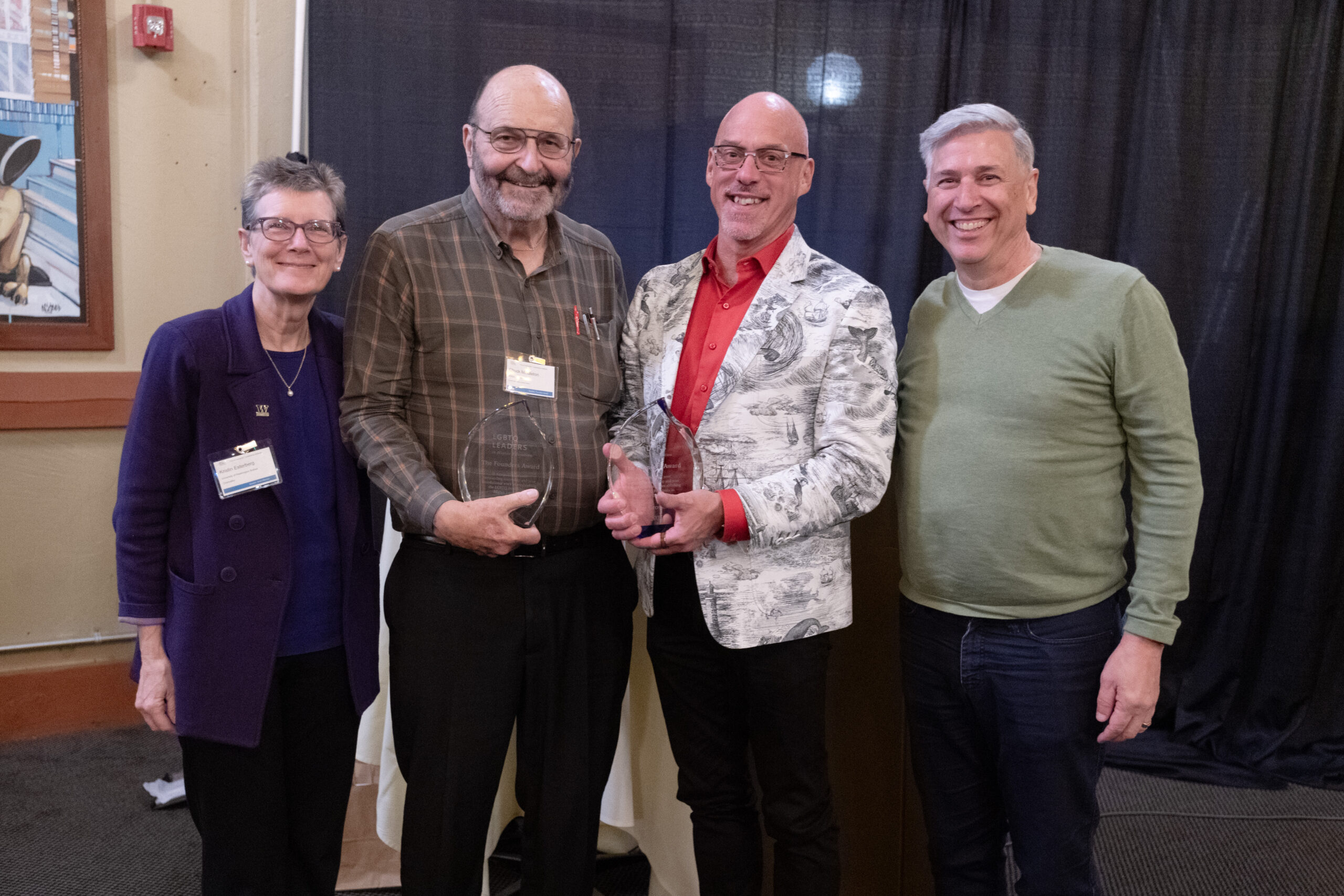
In conclusion, I thank you from the bottom of my heart for carrying the work forward in your lives and careers. Take it from me, a kid who grew up in the 1950’s in the racist and homophobic American South, when we remain true to ourselves, when we are out and authentic, great things can and will happen.
Count on it!